Every morning, Margaret’s daughter calls before work. Some days, Margaret answers. On other days, she may be having breakfast, getting dressed, or simply away from the phone.
Her daughter knows that missing a call does not necessarily mean something is wrong. Still, she wants her mother to hear a familiar voice and know that someone is thinking about her.
So she records a short message:
“Good morning, Mom. I hope you slept well. I’m thinking of you, and I’ll call again tonight.”
It takes less than a minute to record, but it can add a familiar and reassuring moment to Margaret’s morning.
For families who cannot always be physically present, small moments like this can help maintain connection across distance. Technology cannot replace a visit, a conversation, or the comfort of being together. Used thoughtfully, however, it can help a familiar voice remain part of an older loved one’s everyday routine.
Connection Is Often Built Through Small Moments
Staying connected does not always require a long conversation or a special occasion.
A quick greeting in the morning, a reminder about lunch, or a message wishing someone a good night can communicate something important: You are remembered. You matter. Someone is thinking about you.
These small interactions may be especially meaningful for an older adult who lives alone, has limited opportunities for social contact, or experiences changes in memory and cognition.
Families often try to maintain this connection through phone calls. Calls remain valuable, but they do not always happen at the right moment. The older adult may not hear the phone, may be occupied with another activity, or may find an unexpected call difficult to manage.
A recorded message provides another option. It does not replace direct contact, but it can complement it by bringing a trusted voice into familiar parts of the day.
Why Familiarity Matters
A voice carries more than words. It also carries personality, emotion, shared history, and the recognizable patterns of a relationship.
A daughter’s laugh, a grandson’s greeting, or a caregiver’s calm instructions may feel more personal than a generic electronic sound. The message can use familiar names, expressions, and references that make sense to the individual receiving it.
For someone experiencing cognitive change, simplicity and familiarity can be particularly helpful. A short message from someone they know may be easier to relate to than a complicated interface or an unfamiliar automated voice.
The goal is not to overwhelm the person with information. It is to create a predictable, respectful experience that fits naturally into their routine.
Messages That Support Everyday Routines
Familiar voice messages can be used for both emotional connection and practical support.
- “Good morning, Dad. I hope you have a lovely day.”
- “Hi, Grandma. I’m thinking about you and sending you a big hug.”
- “It’s lunchtime. Your soup is ready in the fridge.”
- “This is a reminder that your appointment is at two o’clock today.”
- “Please remember to have some water with your lunch.”
- “Good night, Mom. I’ll speak with you tomorrow.”
The most useful messages are usually short, clear, warm, and specific. They should sound like the person who recorded them rather than like formal instructions.
Tone matters as much as content. A message can invite and encourage without sounding demanding. “It’s time to take your medication” may be appropriate in one situation, while “Hi, Dad. This is your lunchtime medication reminder” may feel more supportive in another.
Important: Medication reminders are only prompts. They do not confirm that medication was taken and should not replace an appropriate medication-management or care plan.
Bringing Familiar Voices Into the Day With Tochie
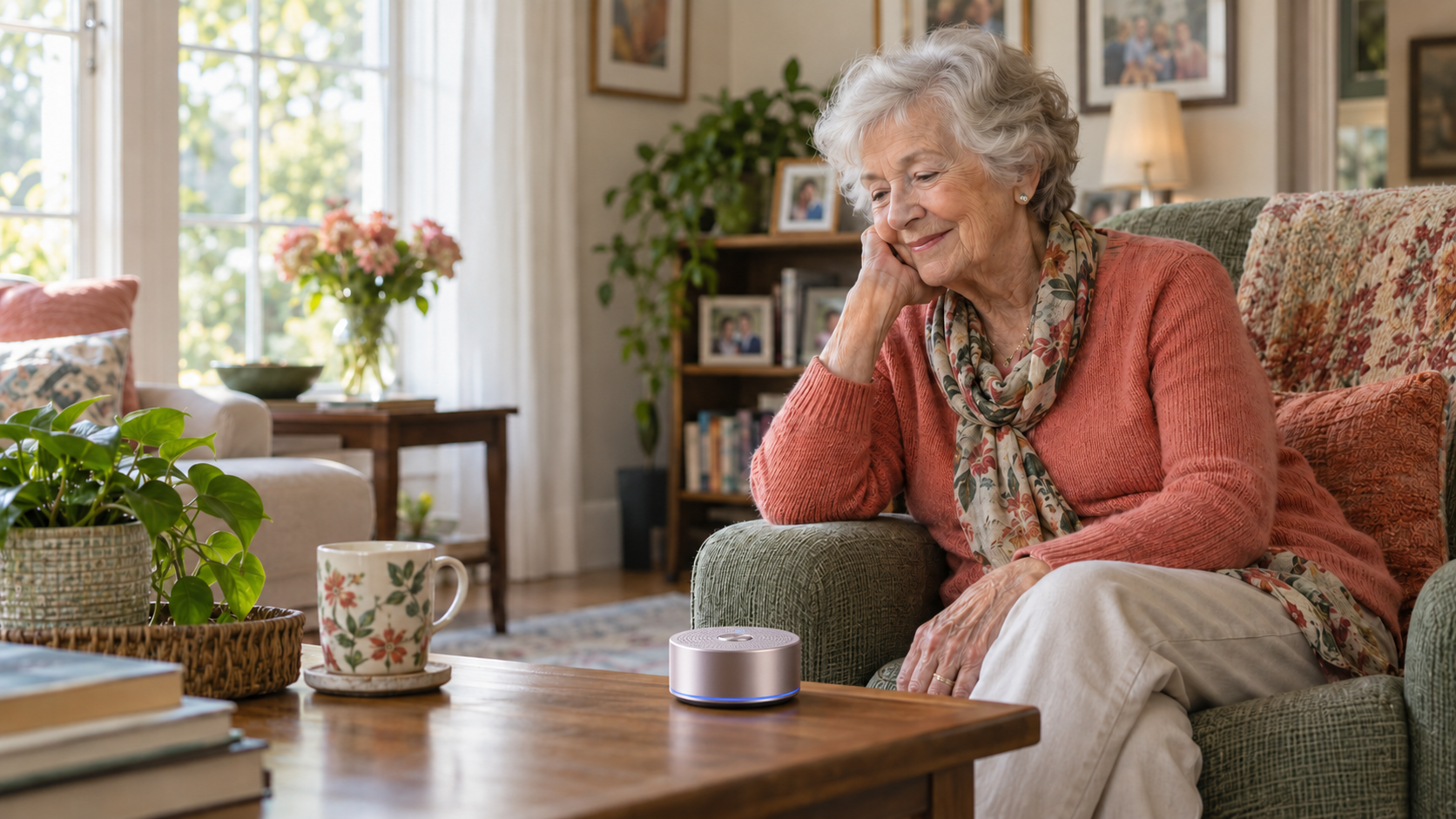
Tochie is Tochtech’s familiar-voice communication and reminder solution. It allows loved ones, family members, or caregivers to record messages in their own voices and manage them remotely through a mobile application.
Messages can be scheduled around an individual’s routine or sent when a timely greeting or reminder would be helpful. Tochie can support reminders for meals, hydration, medication, appointments, and other everyday activities. It can also deliver messages whose only purpose is connection: a family update, an encouraging thought, or a simple hello.
Because Tochie records and plays a person’s own voice, families can use the spoken language and expressions most familiar to their loved one. This is different from text-to-speech technology, which generates spoken words from written text.
Tochie is intentionally simple and predictable. It does not use AI conversation and does not provide two-way voice communication. The person receiving a message is not expected to learn how to speak with a virtual assistant or navigate a complicated communication system.
That simplicity can be a strength. The technology has a focused role: helping familiar voices remain present in everyday life.
Keep the Person at the Centre
Voice messages should be introduced with the older adult’s knowledge and involvement wherever possible.
Families can start by asking what kinds of messages would be welcome. Some people may enjoy a daily greeting. Others may prefer only occasional reminders or family updates. The timing, frequency, tone, and purpose should reflect the person’s preferences and routine.
It is also important to avoid using recorded messages as a substitute for meaningful human contact. A reminder device cannot listen, respond, notice emotion, or share a real conversation. Families and care providers should continue creating opportunities for calls, visits, community participation, and other forms of connection that matter to the individual.
Technology works best when it supports relationships instead of trying to replace them.
Ideas for Meaningful Messages
Families considering familiar voice messages can begin with a few simple questions:
- Whose voices does the person most enjoy hearing?
- Which parts of the day would benefit from a reassuring greeting?
- Are there routines for which a reminder would be useful?
- What wording feels natural and respectful?
- How often would the person like to receive messages?
- Who will keep the messages current as routines change?
It may help to involve several family members. A grandchild could share a short story from school, a sibling could send a birthday greeting, or a close friend could record a message before an important event.
Messages do not need to be perfect. Their value often comes from sounding genuine and familiar.
Staying Close Even Across Distance
Families cannot always be present for every breakfast, appointment, or quiet evening. Work, travel, geography, and other responsibilities can make daily visits difficult.
That does not mean connection has to disappear from the ordinary moments of the day.
A familiar voice message can offer a small point of reassurance, routine, and emotional connection. It can remind an older loved one that someone is thinking about them while respecting their space and independence.
It is not a replacement for conversation or care. It is one more way for human connection to reach across distance.
Next step
Learn how Tochie can help familiar voices remain part of an older loved one’s daily routine.